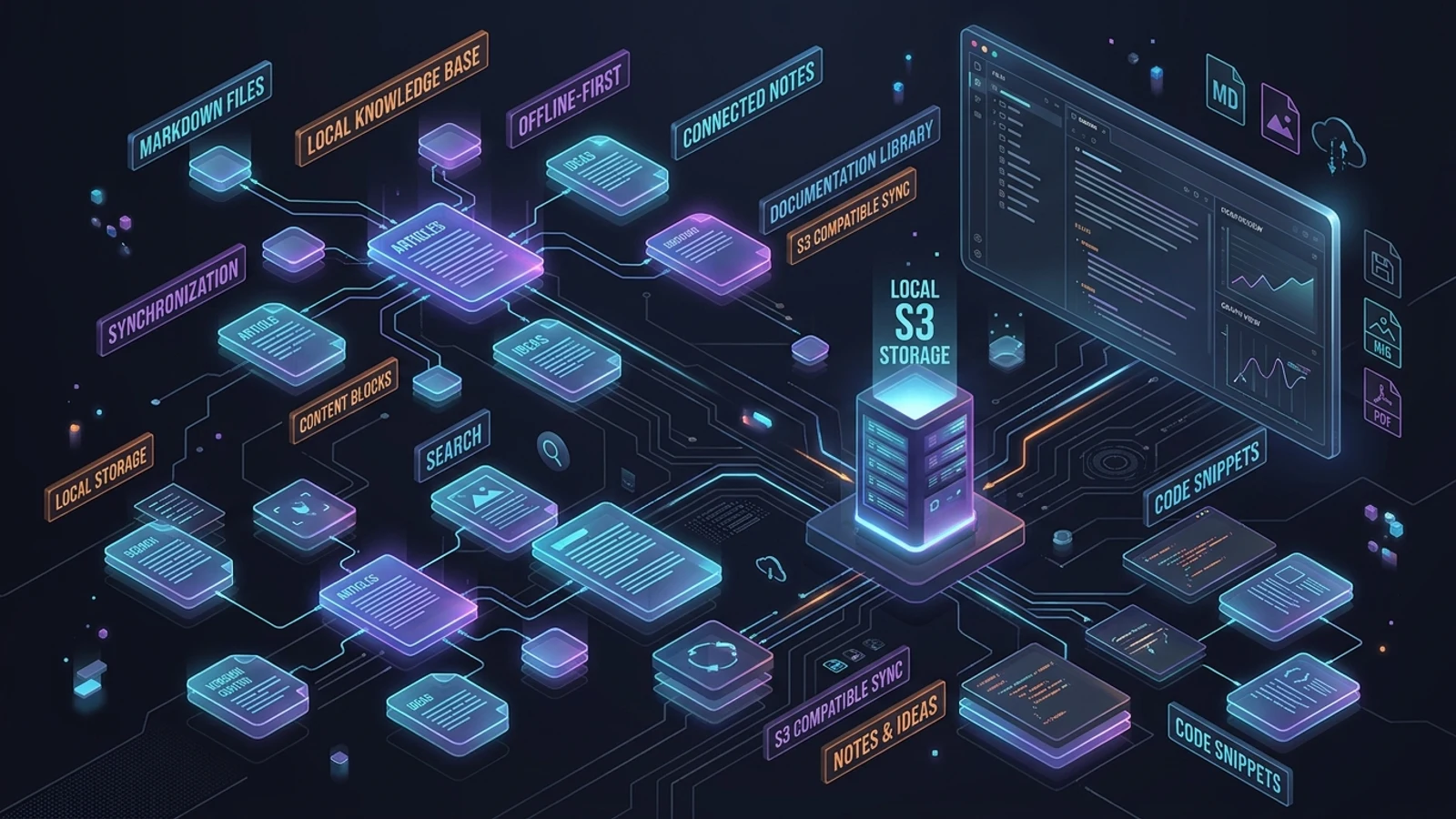
Alexandrie: Offline-First Self-Hosted Knowledge Base and Notion Alternative
Sovereign Documentation: An Offline-First Block Markdown Workspace
Cloud knowledge platforms like Notion and Confluence are the connective tissue of modern engineering teams. Yet reliance on proprietary SaaS introduces familiar compromises: sluggish page loads during intermittent connectivity, vendor lock-in with closed database formats, and escalating per-seat subscription tiers. Alexandrie provides a comprehensive, open-source alternative built from the ground up on an offline-first architecture.
Combining the fluid feel of block-based Markdown with local-first performance, Alexandrie delivers enterprise-grade multi-tenancy, OpenID Connect (OIDC/SSO) integration, fine-grained access controls, and automated local S3-compatible snapshot backups.
What It Is
Alexandrie is a self-hosted collaborative workspace designed for technical documentation, internal wikis, and structured personal note-taking. It preserves all notes as portable, clean Markdown, ensuring your knowledge base remains human-readable and independent of the software itself.
The platform includes a blistering-fast web interface, native code syntax highlighting, bi-directional page linking (backlinks), Mermaid diagram rendering, LaTeX math formatting, and full offline caching with seamless background synchronization.
Why You Have Not Heard Of It
Created by developer Smaug6739, Alexandrie was designed to bridge the gap between single-user local vaults (like Obsidian) and heavyweight team wikis (like Confluence). By strictly avoiding unnecessary architectural bloat and prioritizing modern web standards, it has quickly earned high praise among homelab operators and privacy-first engineering organizations.
How It Works
Alexandrie is built upon three resilient architectural layers:
- Modern Block-Based Editor: Provides modular content blocks that render code snippets, diagrams, tables, and callouts with instantaneous keyboard-driven navigation.
- Conflict-Free Replication Layer: Implements Conflict-Free Replicated Data Types (CRDTs) to reconcile offline edits across multiple team members without data corruption.
- Storage & Authentication Abstraction: Stores structured metadata in PostgreSQL while streaming binary attachments and automated snapshots to any S3-compatible bucket (such as self-hosted MinIO or Garage).
Running It
Deploying Alexandrie is streamlined using Docker Compose:
services:
  alexandrie:
    image: ghcr.io/smaug6739/alexandrie:latest
    container_name: alexandrie
    restart: unless-stopped
    ports:
      - "3000:3000"
    environment:
      - DATABASE_URL=postgresql://alexandrie:secret_pass@db:5432/alexandrie_db
      - NEXTAUTH_SECRET=generate_a_random_secure_secret_here
      - NEXTAUTH_URL=http://localhost:3000
    depends_on:
      - db

  db:
    image: postgres:16-alpine
    container_name: alexandrie-db
    restart: unless-stopped
    environment:
      - POSTGRES_USER=alexandrie
      - POSTGRES_PASSWORD=secret_pass
      - POSTGRES_DB=alexandrie_db
    volumes:
      - ./postgres_data:/var/lib/postgresql/data
Launch the stack:
docker compose up -dAccess the interface at http://localhost:3000 to initialize your admin account and start documenting.
What It Replaces
- Notion SaaS: Delivers rich block-level editing while keeping your intellectual property encrypted on your own storage volumes.
- Heavyweight Confluence Instances: Provides clean engineering documentation that runs on modest hardware without consuming tens of gigabytes of RAM.
- Fragmented Text Files: Unifies scattered team READMEs and notes into an indexed, searchable, and version-controlled knowledge graph.
Limitations
Advanced relational database views and formula-driven spreadsheet tables similar to Notion Databases are currently under active development. The current focus is optimized for rich text, technical wikis, and structured hierarchical knowledge.
Who It Is For
- Software development teams requiring an air-gapped internal wiki for architecture decision records (ADRs) and onboarding docs.
- Homelab enthusiasts wanting a clean, centralized system to map their infrastructure, subnets, and credentials.
- Privacy-focused professionals who refuse to entrust their personal notes to closed commercial clouds.
Conclusion
Alexandrie proves that modern documentation platforms can be responsive, visually polished, and completely sovereign. If you seek an open-source knowledge hub that respects your ownership, Alexandrie is ready for production.