Vaultwarden: The Complete Guide to Self-Hosted Passwords with Pure Rust
Identity Sovereignty: Self-Hosting Zero-Knowledge Password Vaults with Pure Rust
Commercial password managers like LastPass and 1Password are prime targets for nation-state threat actors. High-profile cloud breaches have repeatedly proven that consolidating your master credentials on a proprietary central server introduces unacceptable systemic vulnerability. While Bitwarden offers official self-hosting, its reference architecture mandates over a dozen containers, enterprise MSSQL/MySQL engines, and gigabytes of RAM. Vaultwarden delivers a flawless alternative.
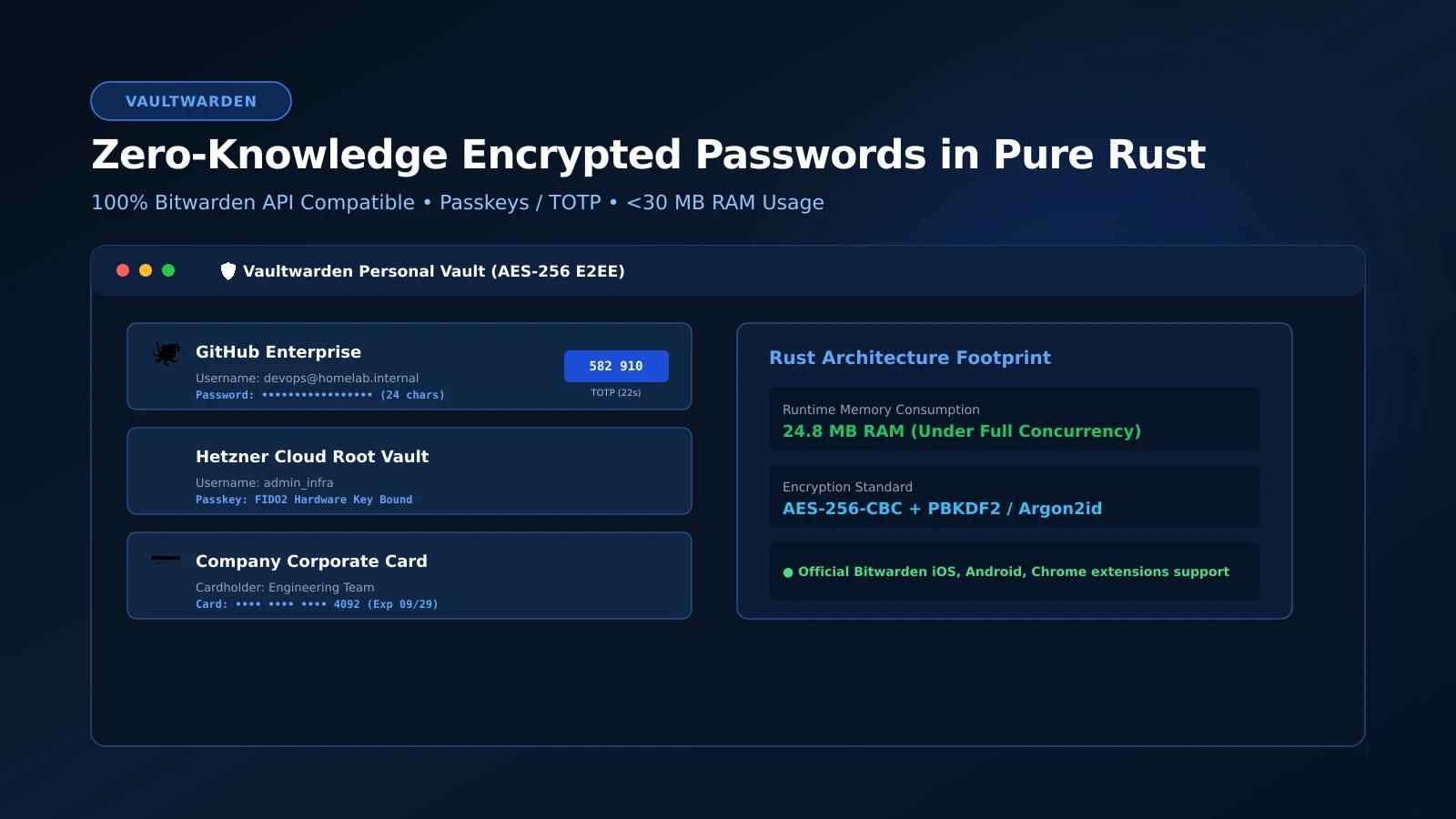
Re-engineered entirely in pure Rust, Vaultwarden implements the complete upstream Bitwarden API specification while maintaining an astonishingly low memory footprint—typically consuming less than 30 MB of RAM under load—while maintaining 100% compatibility with all official Bitwarden browser extensions, mobile apps, and CLI tools.
What It Is
Vaultwarden (formerly bitwarden_rs) is an open-source (AGPL-3.0) backend server designed for lightweight self-hosting. It implements strict zero-knowledge, end-to-end encryption (E2EE): credential blobs and attachments are encrypted client-side using AES-256 and PBKDF2/Argon2id before transmission, ensuring the host server never sees plaintext secrets.
The software unlocks all premium Bitwarden capabilities without license fees: multi-user organizations with shared collections, Passkeys (FIDO2 WebAuthn), integrated TOTP two-factor token generation, encrypted Bitwarden Send file drops, and Emergency Access account recovery.
Why You Have Not Heard Of It
Vaultwarden is among the most universally recommended applications in self-hosted history. Celebrated for its legendary stability and low resource overhead, it allows users to run production-grade password infrastructure indefinitely without maintenance overhead.
How It Works
Vaultwarden leverages the performance and type-safety of modern Rust:
- High-Performance Rust Backend (Rocket): Handles encryption handshakes, authentication tokens, and cipher synchronization with microsecond response latencies.
- Live WebSocket Push Notifications: Dispatches instantaneous push synchronization events across all active client devices when vaults are updated.
- SQLite with WAL Mode: Stores encrypted ciphers in a self-contained local SQLite database file, enabling one-step backups with optional PostgreSQL/MariaDB support.
Step-by-Step Deployment Guide
Critical Security Requirement: Modern browser Web Crypto APIs mandate HTTPS. Vaultwarden must be deployed behind a secure TLS reverse proxy (such as Caddy, Traefik, Nginx, or Cloudflare Tunnels) with a valid SSL certificate.
Here is the production docker-compose.yml configuration:
services:
  vaultwarden:
    image: vaultwarden/server:latest
    container_name: vaultwarden
    restart: unless-stopped
    ports:
      - "8080:80"
      - "3012:3012"
    volumes:
      - ./vw-data:/data
    environment:
      - WEBSOCKET_ENABLED=true
      - SIGNUPS_ALLOWED=true # Disable after registering initial admin
      - INVITATIONS_ALLOWED=true
      - ADMIN_TOKEN=generate_a_secure_long_random_token_here
      - TZ=UTC
Start the service:
docker compose up -dRoute incoming traffic to port 8080 and WebSocket traffic to port 3012 over your reverse proxy, then open the web vault, register your account, and configure the official Bitwarden mobile/browser extensions to point to your custom server URL.
What It Replaces
- Proprietary Password Clouds (1Password / LastPass): Shields you from centralized cloud compromises while restoring full ownership of your credentials.
- Heavyweight Official Bitwarden Clusters: Shrinks resource consumption from 3+ GB RAM down to 25 MB, running effortlessly on low-cost VPS instances or Raspberry Pis.
- Standalone 2FA Apps: Integrates TOTP token generation directly into auto-fill workflows.
Limitations
Enterprise LDAP directory synchronization requires external helper tools rather than the built-in enterprise directory connectors found in Bitwarden’s commercial corporate tiers.
Who It Is For
- Privacy-conscious individuals and families seeking absolute security for their credentials.
- Small businesses and engineering teams needing secure internal credential sharing.
- Homelab operators establishing foundational zero-trust security infrastructure.
Conclusion
Vaultwarden represents the gold standard of open-source engineering. By combining Rust’s memory efficiency with Bitwarden’s battle-tested security model, it is the single most important service you can deploy on your private server.